How to Plan Entertainment for a Punjabi Wedding
What to book, when to book it, and the questions worth asking before you do.
Plan Punjabi wedding entertainment by event rather than as one booking. Work out which nights you are holding, decide which need live performance and which need a DJ, book around twelve months ahead for wedding-season dates, and book connected services together so the handovers on the night are planned.
Start with the schedule, not the suppliers
The most common planning error is booking entertainment before the schedule is settled. Work out which events you are holding first — Maiyan, Mehndi, Sangeet, Jago, the wedding day, the reception — and which of them are large enough to need booked performers. Only then start talking to suppliers.
This matters because entertainment decisions cascade. A Sangeet combined with a Mehndi is a different booking from two separate nights. A baraat at a hotel is a different booking from one at a gurdwara with a walk from the car park.
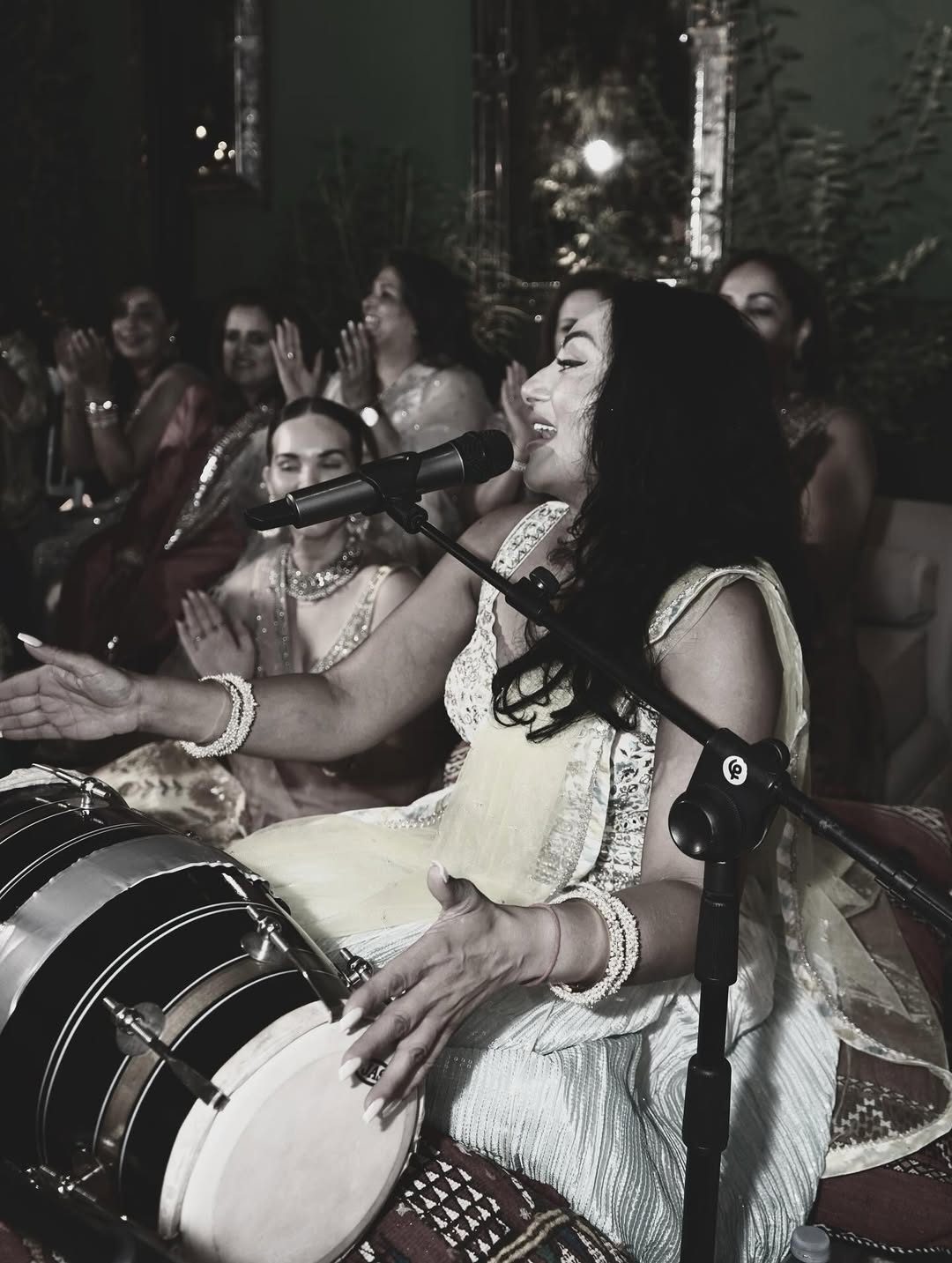
What suits each event
- Sangeet — live singers. The whole event is built on singing and participation, and recorded music cannot lead boliyan.
- Jago — dhol. It is a procession, and the instrument needs to move.
- Baraat — dhol, usually more than one player if it is outdoors.
- Mehndi — sustained background music, live or recorded, since guests are seated for a long stretch.
- Reception — commonly a live set early and a DJ for the rest of the night.
Live performers or a DJ?
This is usually framed as a choice and it usually should not be. They do different jobs. A DJ gives an evening its length — hours of continuous music, reading the floor and adjusting. Live performance gives an evening its moments: the entrance, the boliyan, the first dance.
Most weddings want both. The question is not which one, it is where each sits in the night.
Book connected services together
If you book dhol from one supplier, singers from another and a DJ from a third, nobody owns the transitions. The dead gap while equipment is swapped over, the dhol entry that does not land on the right beat of the DJ track, the live set that overruns into the speeches — these are coordination failures, not performance failures.
Booking connected services from one supplier means somebody is responsible for the joins. If you do use multiple suppliers, at minimum put them in contact with each other before the day.
When to book
Around twelve months ahead for wedding-season dates. Good performers get booked early and Saturdays in peak season go first. If you are working to shorter notice it is still worth asking — availability varies — but do not assume it.
Questions worth asking any supplier
- Do you bring your own sound equipment, and does that include lighting?
- How many performers will actually attend, and is that fixed or matched to the event?
- Can we agree the set list in advance, including songs we do not want?
- Will you coordinate directly with our venue and planner?
- What happens if the schedule runs late on the night?
- Is travel included in the quote or added afterwards?
That last one catches people out more than it should. Ask whether the figure quoted is the figure payable.
Tell your suppliers about the venue early
Venues impose constraints that change what is possible: sound limits, curfews, what can be rigged and where, whether a procession can move through the building. Discovering these after booking is far worse than designing around them beforehand.
Ready to talk about your event?
Tell us the date, the venue and what you have in mind, and we will put together a bespoke quote.
Get a quote