What a Dhol Player Does at a Wedding
Where the dhol belongs across the day, and how many players you actually need.
A dhol is a double-headed Punjabi drum played with two sticks and worn on a strap. At a wedding, dhol players perform for the baraat procession, the couple’s entrances, the Jago, and dance sets — anywhere the celebration needs to move or needs lifting.
The instrument
The dhol is a barrel drum with two heads, played with two different sticks: a heavy bent stick for the bass side and a thin one for the treble side. It is worn on a strap over the shoulder, which is the detail that matters most for weddings — the player can walk.
It is also extremely loud, by design. It was built to be heard outdoors across a field, which is why it works for processions and why the number of players needs thought indoors.
The baraat
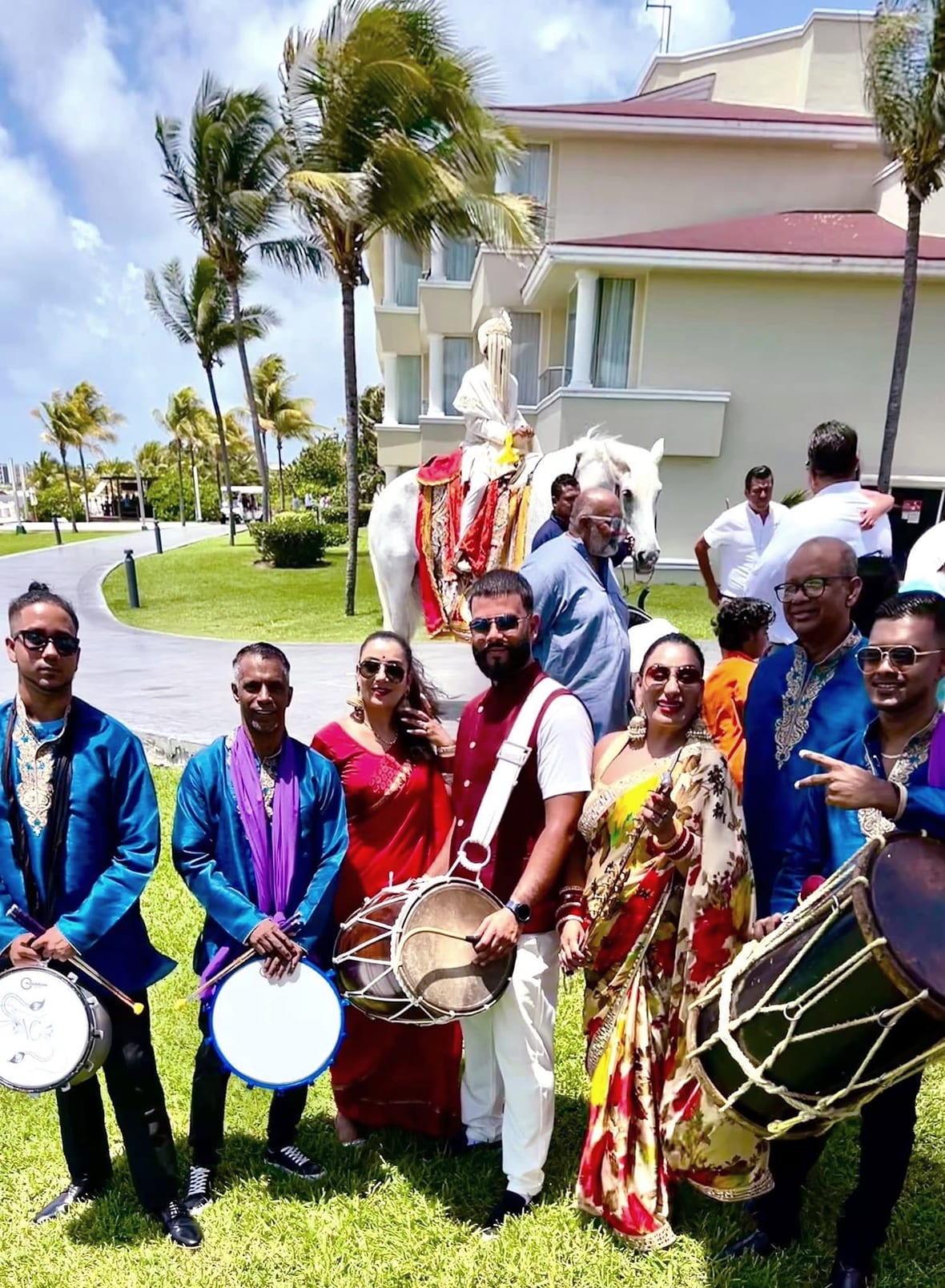
The baraat is the groom’s procession to the wedding venue, and it is the dhol’s signature moment. Without it, a baraat is a group of people walking. With it, it is an arrival that the whole venue hears coming.
Outdoor baraats need more players than people expect. Sound disperses outdoors with nothing to reflect off, and a single dhol that fills a function room can sound thin in a car park with fifty people around it.
Entrances
The couple’s entrance into a reception is the other classic dhol moment. Here the requirement is different: it is about precision rather than volume. The entry has to land on cue with the doors, the lighting and whatever the DJ is playing.
That is a coordination job as much as a performance one, which is why it is worth having the dhol players and the DJ briefed together rather than separately.
The Jago
The Jago is a night-time procession with a decorated, candle-lit pot carried on the head, and it is one of the liveliest events of the wedding week. It moves, it is often partly outdoors, and it is driven by dhol from start to finish.
Dance sets and lifting a flat room
Dhol is also the most reliable tool for rescuing a room that has gone flat — after a long seated meal, or during a lull between the formal parts of the evening. A few minutes of live dhol does something to a room that a change of track does not.
How many players?
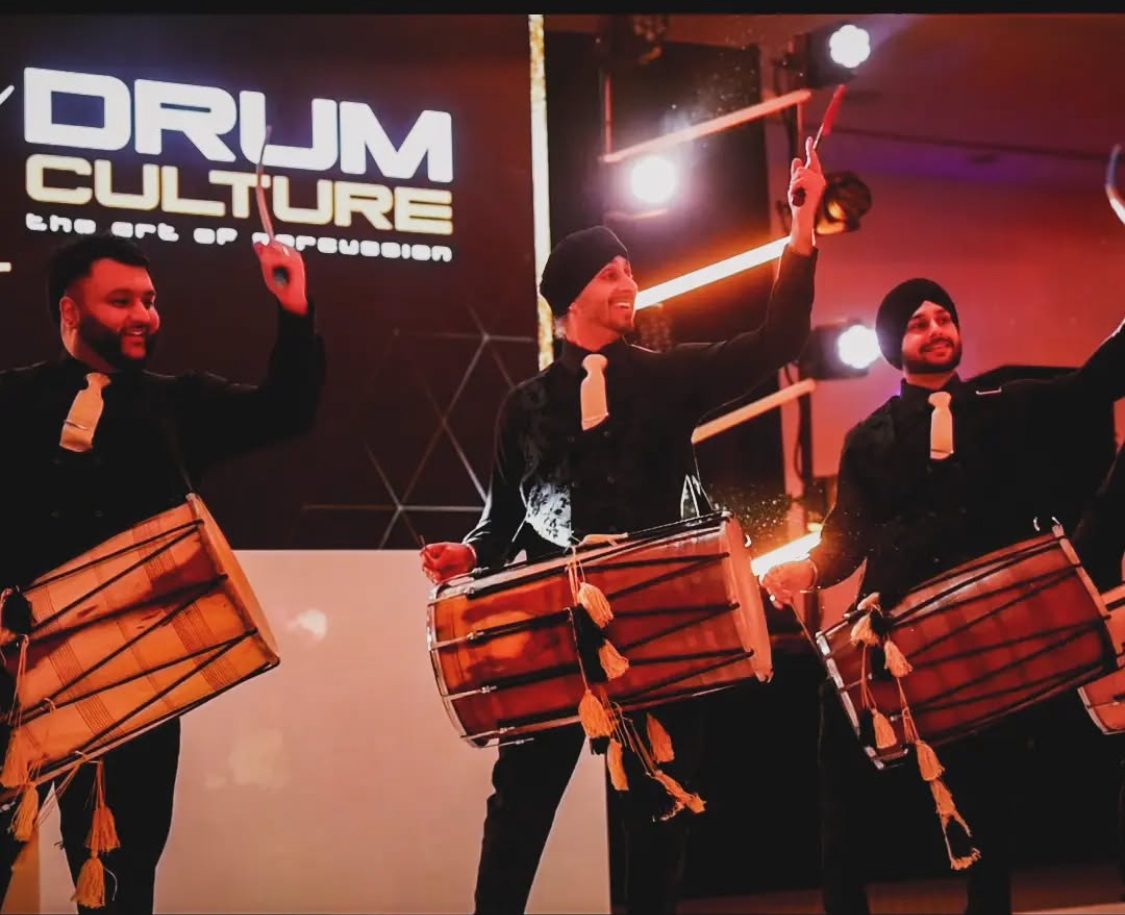
It depends on the space and the moment. A single player is right for an intimate indoor entrance and can be too much in a small room if you over-book. A larger group is right for an outdoor baraat, a big hall or a Jago, where you want weight and presence.
The honest answer is that it should be decided per event rather than chosen from a list. Describe the space and the moment to whoever you are booking and let them recommend.
Briefing dhol players properly
- Where exactly the procession or entrance starts and finishes.
- Who gives the cue, and what the cue is.
- Whether it is indoors, outdoors or both.
- What is playing before and after, especially if a DJ is involved.
- Any venue sound restrictions or curfews.
- Whether there are steps, narrow doorways or a long walk involved.
None of that is complicated, but it is the difference between an entrance that lands and one that starts thirty seconds late while everybody waits.
Ready to talk about your event?
Tell us the date, the venue and what you have in mind, and we will put together a bespoke quote.
Get a quote